Description
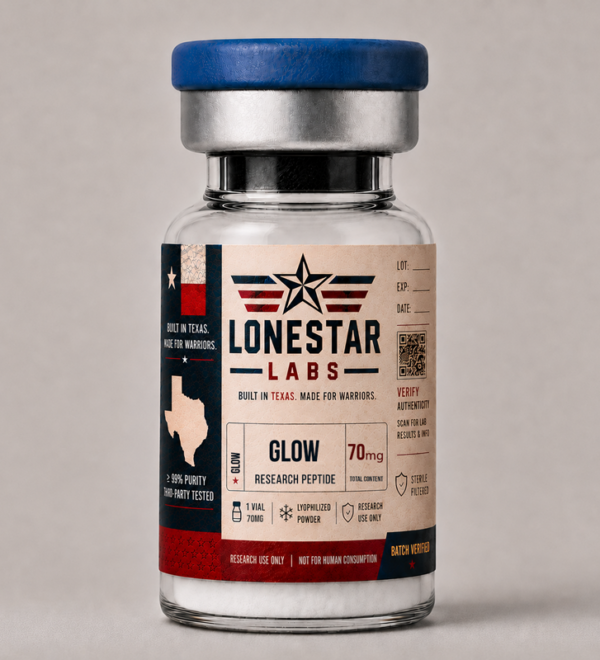
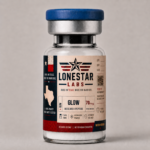
Research Peptide Blend
Contents Per Vial
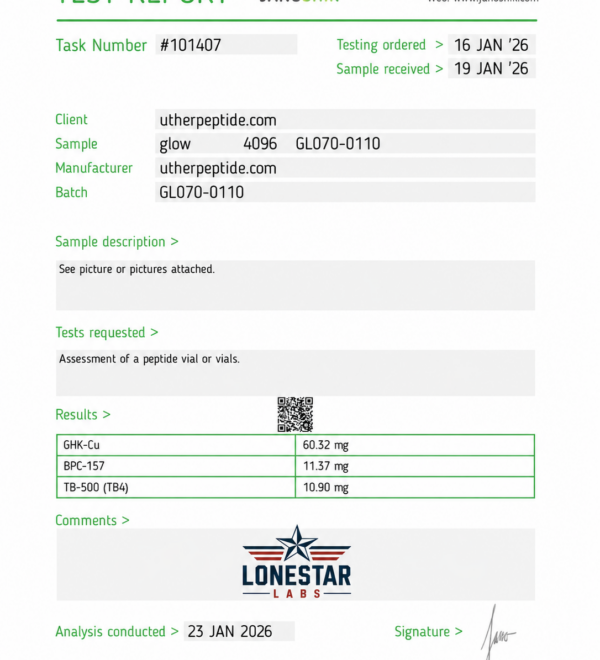
- BPC-157 — 10 mg
- GHK-Cu — 50 mg
- TB-500 — 10 mg
Total Peptide Content: 70 mg
Form: Sterile Lyophilized Powder
Purity: ≥99% (HPLC-tested batches)
Storage: Store at −20 °C away from direct light
Packaging: Laboratory glass vial with protective sleeve
Product Overview
GLOW™ is a multi-peptide research formulation combining BPC-157, GHK-Cu, and TB-500 for investigational and laboratory research applications involving regenerative biology, tissue remodeling, cellular signaling, and inflammatory response pathways.
Each peptide component has been widely referenced throughout preclinical literature for its role in mechanisms associated with angiogenesis, extracellular matrix support, fibroblast activity, and tissue repair processes.
This product is supplied exclusively for laboratory research and analytical purposes.
Intended Research Applications
This formulation may be utilized in controlled laboratory environments for investigation into:
- Tissue regeneration pathways
- Collagen signaling and remodeling
- Angiogenic activity
- Inflammatory response modulation
- Cellular migration and repair mechanisms
- Tendon, muscle, and connective tissue studies
Important Notice
FOR RESEARCH USE ONLY.
This material is not intended for human consumption, veterinary use, therapeutic application, or diagnostic purposes.
Products sold by Lonestar Labs are intended solely for qualified researchers and licensed laboratory professionals operating in compliance with applicable laws and regulations.
These statements have not been evaluated by the U.S. Food and Drug Administration (FDA). This product is not intended to diagnose, treat, cure, or prevent any disease or medical condition.
Scientific Overview
BPC-157 (10 mg)
BPC-157 is a synthetic pentadecapeptide investigated in multiple preclinical models involving tissue repair and regenerative signaling. Published animal and in vitro studies have examined its potential role in fibroblast migration, angiogenesis, oxidative stress response, and tendon-related cellular activity.
Several studies have explored signaling pathways associated with focal adhesion kinase (FAK) and paxillin activity, as well as VEGFR-2-mediated angiogenic responses and antioxidant enzyme regulation.
GHK-Cu (50 mg)
GHK-Cu is a naturally occurring copper-binding peptide complex studied extensively for its involvement in collagen synthesis, extracellular matrix signaling, fibroblast function, and inflammatory response modulation.
Preclinical research has evaluated its effects on wound remodeling, tissue regeneration, cytokine signaling, and cellular repair pathways. Additional cosmetic and dermatological research has investigated its relationship to skin appearance, firmness, and collagen-associated activity.
TB-500 (10 mg)
TB-500 is a synthetic peptide fragment modeled after thymosin beta-4 and has been examined in preclinical research related to cellular migration, actin regulation, inflammatory signaling, and tissue remodeling mechanisms.
Animal research models have explored its potential involvement in connective tissue recovery, muscular repair pathways, and fibrosis-related responses.
Research Summary
The GLOW™ peptide blend was designed for advanced laboratory research involving synergistic peptide interactions associated with tissue repair biology, inflammatory signaling, angiogenesis, and extracellular matrix support.
By combining peptides with distinct but complementary mechanisms currently represented in preclinical literature, this formulation may provide researchers with a broader investigational platform for regenerative and cellular-response studies.
Reference Literature
Selected published and publicly available research includes:
- Chang et al., Journal of Applied Physiology (2011) — tendon fibroblast and migration pathway research involving BPC-157
- MDPI review publications discussing angiogenesis and oxidative stress pathways associated with BPC-157
- Multiple GHK-Cu wound-healing and collagen signaling studies involving fibroblast activity and inflammatory markers
- Frontiers publications evaluating GHK-Cu signaling pathways in preclinical inflammatory models
- Regenerative medicine literature involving thymosin beta-4 analogs and TB-500 tissue-repair investigations