
Description
Research Compound
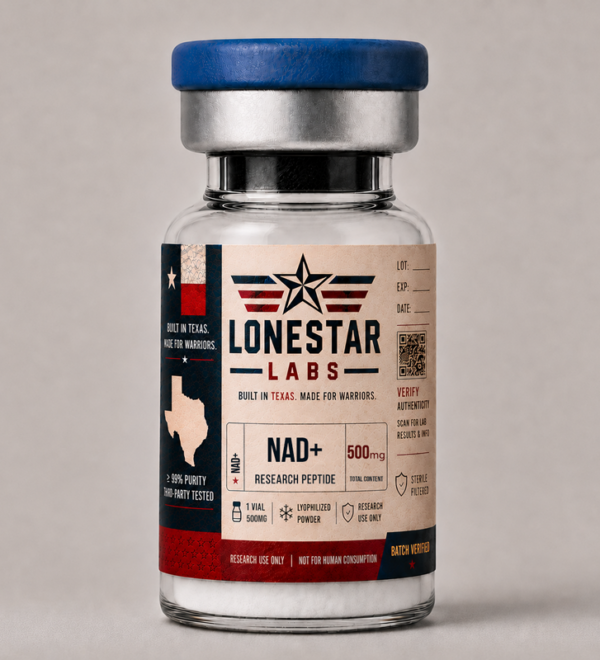
Product Classification: Research Use Only (RUO)
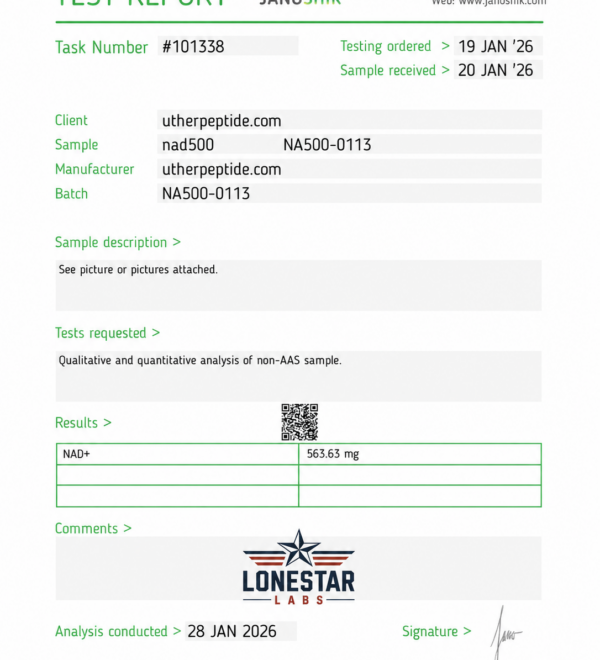
Concentration: 100 mg per vial
Form: Sterile Lyophilized Powder
Purity: ≥99% (HPLC-tested batches)
Storage: Store at −20 °C in a sealed, light-protected container
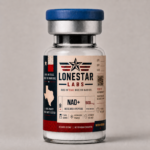
Packaging: Laboratory glass vial with protective sleeve
Product Overview
Nicotinamide Adenine Dinucleotide (NAD⁺) is a naturally occurring coenzyme present in all living cells and is extensively studied for its role in cellular metabolism, mitochondrial function, and energy-transfer mechanisms.
NAD⁺ exists in both oxidized (NAD⁺) and reduced (NADH) forms and serves as a key participant in biological redox reactions associated with ATP production, enzymatic signaling, DNA maintenance pathways, and cellular stress-response systems.
Due to its broad involvement in metabolic and regulatory pathways, NAD⁺ has become a major focus in preclinical research involving aging biology, mitochondrial dynamics, neuroprotection, and cellular energy metabolism.
This material is supplied exclusively for laboratory and analytical research purposes.
Intended Research Applications
This compound may be utilized in controlled laboratory environments for investigation into:
- Mitochondrial respiration and ATP production pathways
- NAD⁺/NADH redox-cycle dynamics
- Cellular aging and metabolic regulation studies
- Sirtuin-associated signaling mechanisms
- DNA repair and oxidative stress-response pathways
- Neurodegenerative and inflammatory-response research
Important Notice
FOR RESEARCH USE ONLY.
This product is not intended for human consumption, veterinary application, therapeutic use, or diagnostic purposes.
Products distributed by Lonestar Labs are intended solely for qualified laboratory professionals and authorized research institutions operating in accordance with applicable laws and regulations.
These statements have not been evaluated by the U.S. Food and Drug Administration (FDA). This product is not intended to diagnose, treat, cure, or prevent any disease or medical condition.
Scientific Overview
Abstract
NAD⁺ is widely recognized within scientific literature as a central cofactor involved in cellular metabolism, mitochondrial energetics, and intracellular signaling pathways.
Current preclinical research has explored the relationship between NAD⁺ availability and processes associated with metabolic function, oxidative stress response, cellular resilience, and age-related biological decline. Investigational studies in animal and laboratory models have examined the effects of NAD⁺ restoration on mitochondrial efficiency, genomic maintenance, inflammatory signaling, and neurological function.
As a high-purity lyophilized research compound, NAD⁺ is frequently utilized in mechanistic and translational research involving energy metabolism and cellular homeostasis.
Biological Pathways & Mechanistic Research
1. Mitochondrial Energy Metabolism
NAD⁺ functions as an electron carrier in glycolysis, fatty acid oxidation, and the tricarboxylic acid (TCA) cycle, where it is reduced to NADH before participating in electron transport-chain activity.
Preclinical investigations have examined its relationship to mitochondrial respiration and cellular energy-transfer efficiency.
2. Sirtuin-Associated Signaling
Sirtuins are NAD⁺-dependent enzymes involved in transcriptional regulation, stress-response signaling, mitochondrial biogenesis, and circadian rhythm research.
Laboratory models have explored how NAD⁺ availability may influence cellular adaptation pathways and metabolic signaling networks.
3. DNA Repair & Cellular Stress Response
Poly-ADP-ribose polymerases (PARPs) utilize NAD⁺ during cellular DNA-repair processes, particularly under oxidative stress conditions.
Research has investigated the relationship between declining NAD⁺ levels and genomic-maintenance mechanisms in aging and stress-related cellular models.
4. Neurological & Neuroprotective Research
NAD⁺ has been examined in preclinical neurological studies involving axonal integrity, calcium regulation, oxidative stress response, and inflammatory signaling.
Experimental models continue to evaluate its role in cellular resilience and neurodegenerative research pathways.
Formulation & Stability Notes
- Solubility: Water-soluble under laboratory preparation conditions
- Handling: Reconstitution should only be performed in appropriate sterile laboratory settings
- Storage Stability: Sensitive to temperature and light exposure; maintain frozen storage conditions when possible
- Biological Stability: Experimental degradation rates may vary depending on NADase enzyme activity and model conditions
Selected Preclinical Research Highlights
Published and publicly available research has investigated NAD⁺ across multiple experimental models involving:
- Mitochondrial function and cellular energetics
- Metabolic efficiency and insulin-signaling pathways
- Neuroinflammatory and oxidative-stress mechanisms
- Axonal protection and neural tissue resilience
- Aging-associated metabolic decline and cellular repair systems
These findings remain investigational and are limited to laboratory and preclinical research contexts.