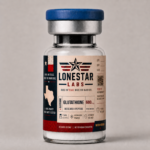
Description
Research Compound
Product Classification: Research Use Only (RUO)
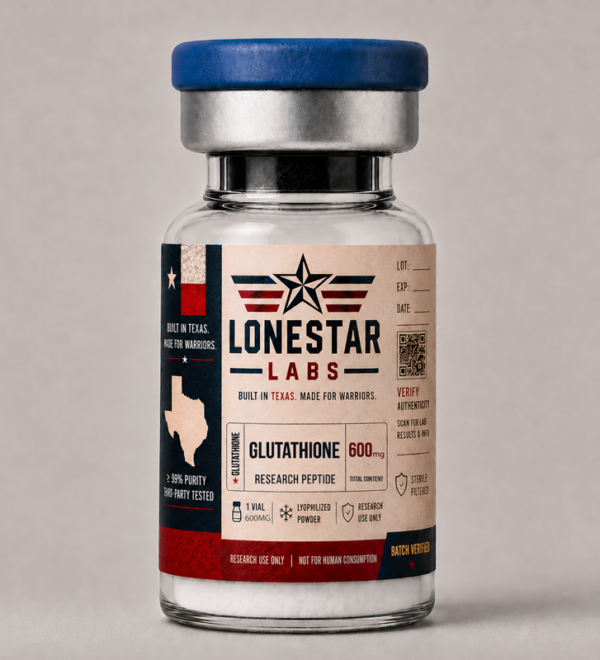
Concentration: 600 mg per vial
Form: Sterile Lyophilized Powder
Purity: ≥99% (HPLC-tested batches)
Storage: Store at −20 °C in a sealed, light-protected container
Packaging: Laboratory glass vial with protective sleeve
Product Overview
Glutathione is a naturally occurring tripeptide composed of glutamine, cysteine, and glycine and is widely investigated in laboratory research involving oxidative stress-response systems, cellular redox balance, and metabolic signaling pathways.
As one of the body’s primary endogenous antioxidant compounds, Glutathione has generated substantial scientific interest in studies involving mitochondrial biology, detoxification-associated pathways, cellular resilience mechanisms, and peptide-mediated metabolic communication systems.
Scientific literature has explored Glutathione within laboratory models involving oxidative stress regulation, free-radical signaling, cellular defense mechanisms, and metabolic homeostasis research.
This material is supplied strictly for laboratory and analytical research purposes.
Intended Research Applications
This compound may be utilized in controlled laboratory environments for investigation into:
- Oxidative stress-response pathways
- Cellular redox and antioxidant signaling systems
- Mitochondrial and metabolic pathway research
- Free-radical and cellular-defense investigations
- Detoxification-associated signaling studies
- Cellular resilience and metabolic homeostasis research
Important Notice
FOR RESEARCH USE ONLY.
This product is not intended for human consumption, veterinary application, therapeutic use, or diagnostic purposes.
Products distributed by Lonestar Labs are intended solely for qualified laboratory professionals and authorized research institutions operating in accordance with applicable laws and regulations.
This compound is not a dietary supplement, pharmaceutical product, or approved drug product and must not be utilized in food, cosmetic, or human/veterinary applications.
These statements have not been evaluated by the U.S. Food and Drug Administration (FDA). This product is not intended to diagnose, treat, cure, or prevent any disease or medical condition.
Buyer assumes full responsibility for proper handling, storage, research application, and regulatory compliance.
Scientific Overview
Abstract
Glutathione is a naturally occurring antioxidant tripeptide investigated extensively within cellular biology and metabolic research involving oxidative stress-response systems and redox-associated signaling pathways.
Published scientific literature has explored its relationship to mitochondrial activity, cellular-defense mechanisms, metabolic homeostasis, detoxification-associated pathways, and free-radical regulation systems. Due to its central role in endogenous antioxidant biology, Glutathione remains a foundational investigational compound in oxidative stress and metabolic research environments.
Current studies continue to evaluate its role within cellular resilience and metabolic communication systems.
Biological & Mechanistic Research Pathways
1. Oxidative Stress & Redox Signaling
Glutathione has been investigated for its interaction with cellular antioxidant systems and oxidative stress-response pathways associated with redox balance regulation.
Research models have explored how endogenous antioxidant compounds may influence cellular-defense communication systems and metabolic signaling dynamics.
2. Mitochondrial & Metabolic Research
Scientific investigations have explored relationships between Glutathione-associated signaling and mitochondrial communication pathways involving energy regulation and metabolic homeostasis.
Experimental studies continue to evaluate its role within cellular energy and metabolic-response systems.
3. Cellular Defense Mechanisms
Published literature has examined Glutathione within laboratory models involving free-radical signaling, detoxification-associated pathways, and cellular resilience mechanisms.
Research continues to investigate how antioxidant signaling systems interact with metabolic and oxidative stress-response pathways.
4. Detoxification & Cellular Homeostasis
Glutathione has also been studied within experimental models involving detoxification-associated signaling systems and peptide-mediated metabolic communication pathways related to cellular equilibrium and stress adaptation.
These investigations remain ongoing within controlled laboratory environments.
Pharmacokinetic & Structural Notes
- Compound Type: Naturally occurring antioxidant tripeptide
- Research Interest: Oxidative stress and metabolic signaling investigations
- Structural Composition: Glutamine, cysteine, and glycine tripeptide complex
- Storage Stability: Sensitive to heat, oxidation, and light exposure; frozen storage recommended
- Research Handling: Reconstitution should only be performed in appropriate sterile laboratory environments
Research Summary
Glutathione remains one of the most extensively investigated antioxidant compounds within cellular biology and metabolic research due to its central role in oxidative stress-response systems and redox-associated signaling pathways.
Its investigational applications continue to generate substantial interest in laboratory studies involving mitochondrial communication systems, cellular-defense mechanisms, metabolic homeostasis, and oxidative stress regulation.
As cellular and metabolic research continues to evolve, Glutathione remains an important investigational compound for controlled laboratory exploration of antioxidant and metabolic signaling systems.
Reference Literature
Published and publicly available scientific literature involving Glutathione research includes investigations focused on:
- Oxidative stress-response pathways
- Cellular antioxidant signaling systems
- Mitochondrial communication mechanisms
- Detoxification-associated research
- Redox and metabolic homeostasis investigations
PubMed – Glutathione Research Publications